Year
2025
Client
Personal Project
Category
Dashboard
Product Duration
3 - 4 Weeks
The Problem
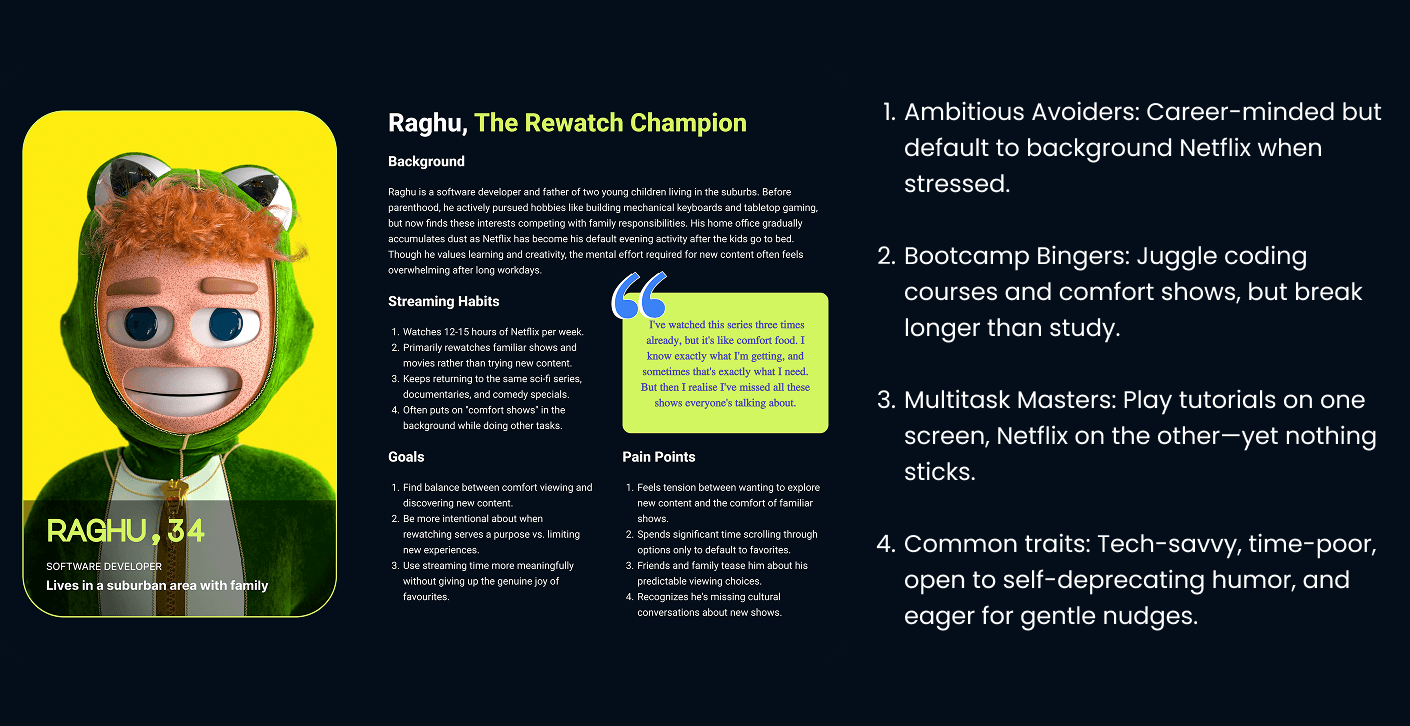
People binge-watch with a mix of guilt and delight, but existing screen-time tools feel like stern teachers.
Raw metrics (“You watched 20 hrs”) trigger defensiveness or get ignored.
Users crave awareness but only if it’s non-judgmental, contextualized, and fun.
Opportunity: create a dashboard that uses self-directed humor and concrete alternative-activity framing to drive real behavior change.
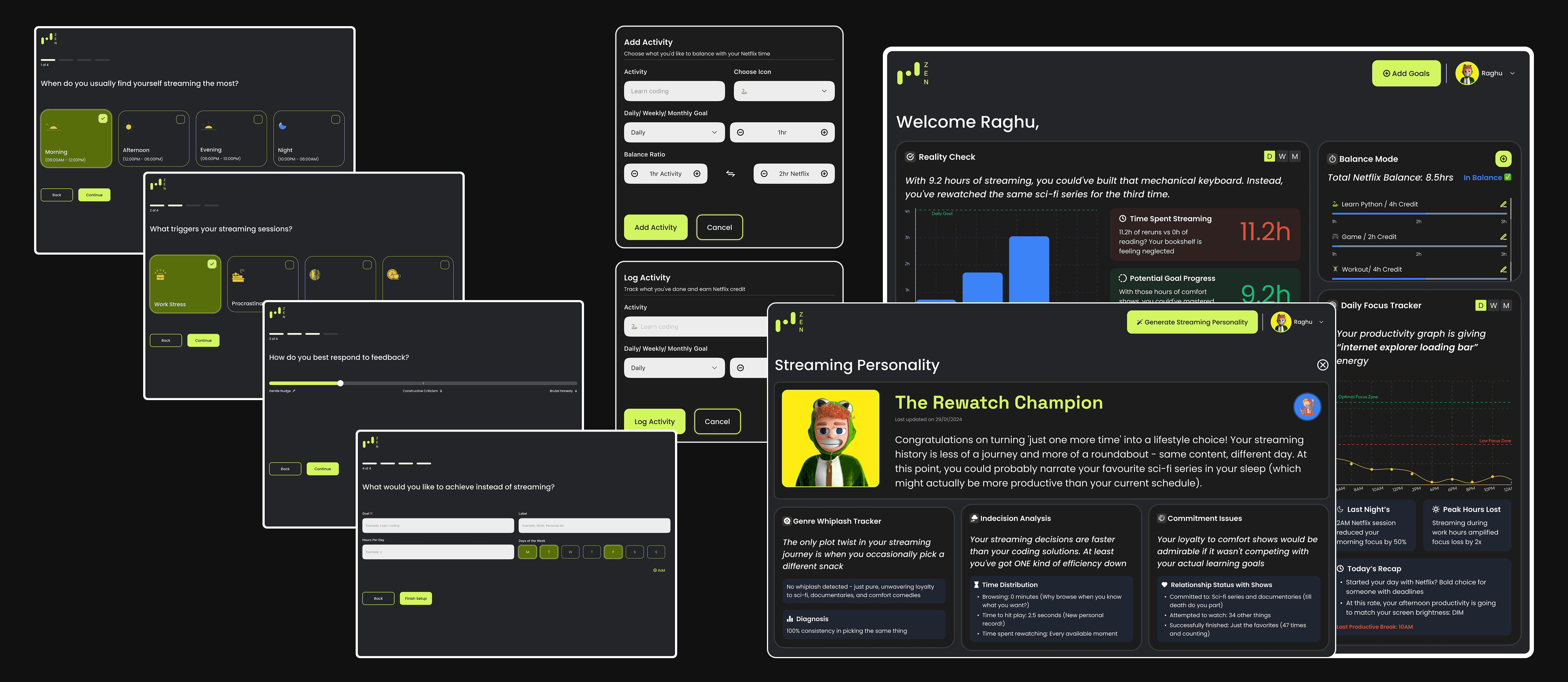
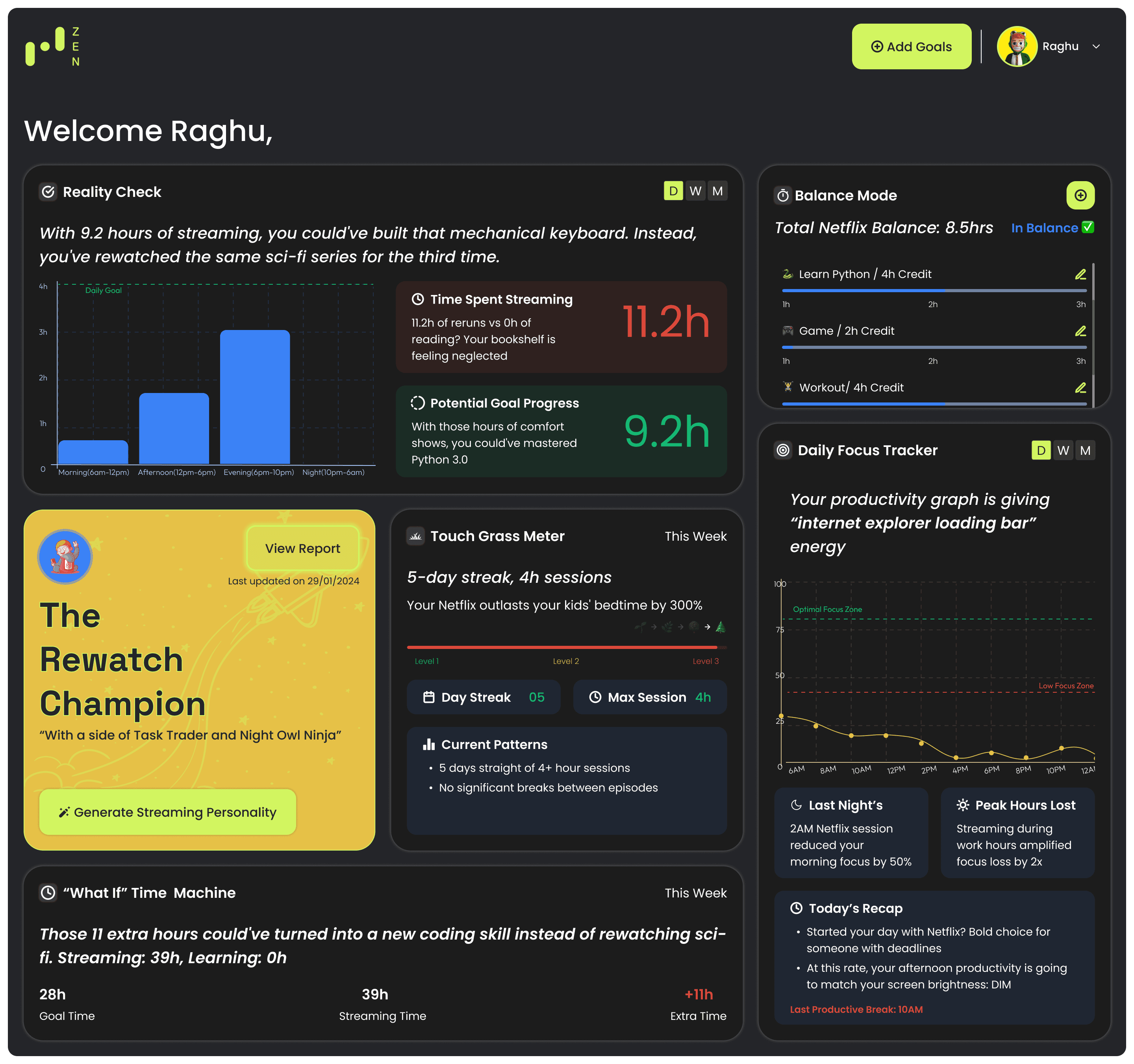
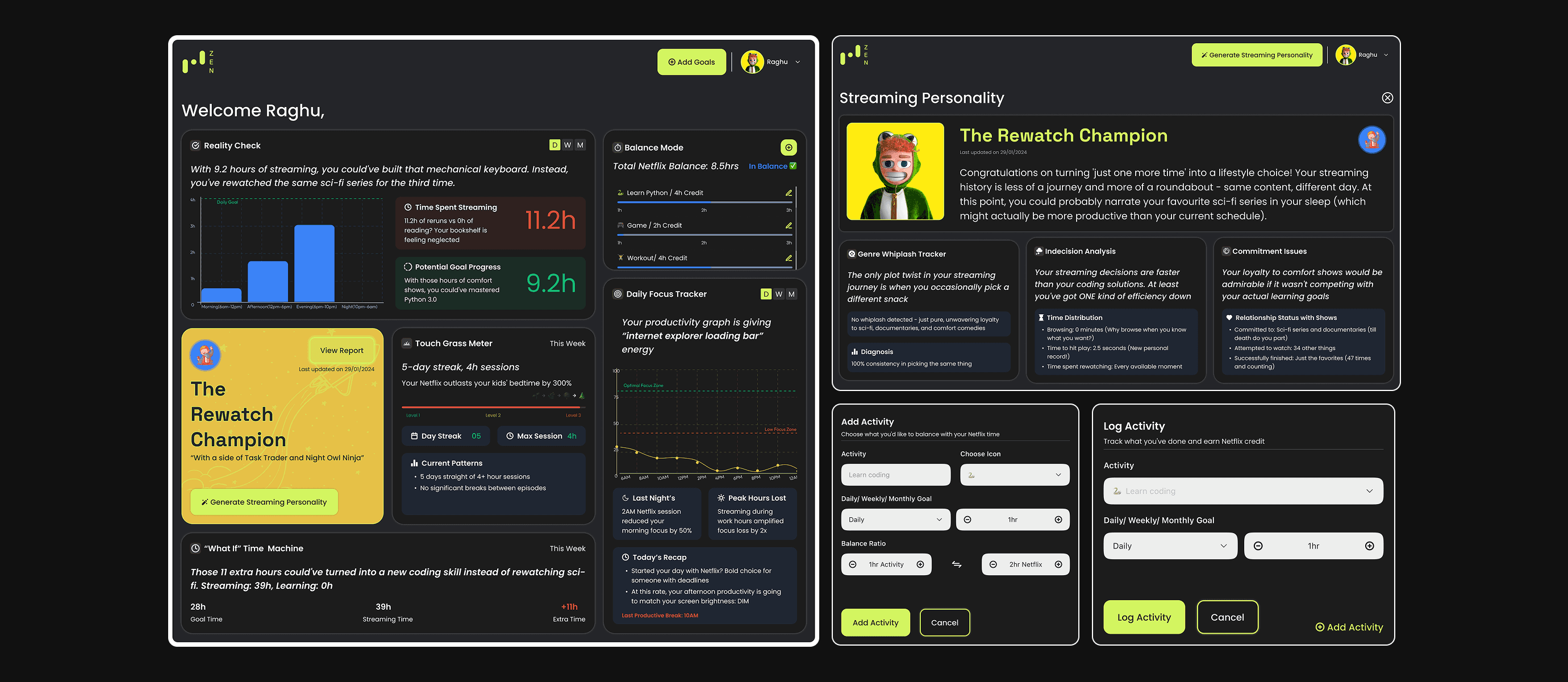
Hero Reality Check: Big chart + one-line roast (“With 9.2 hrs of streaming you could’ve built a mechanical keyboard.”)
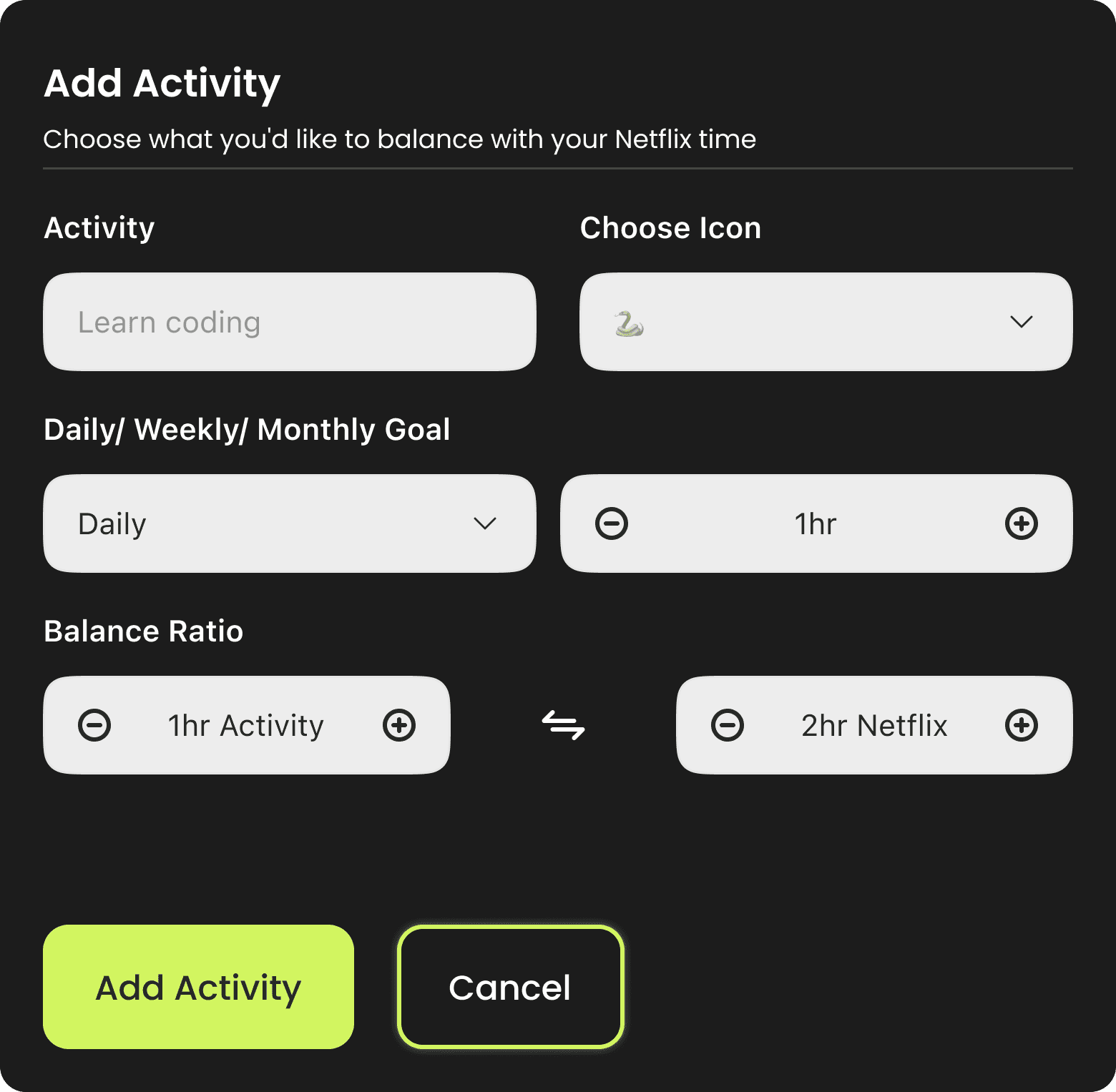
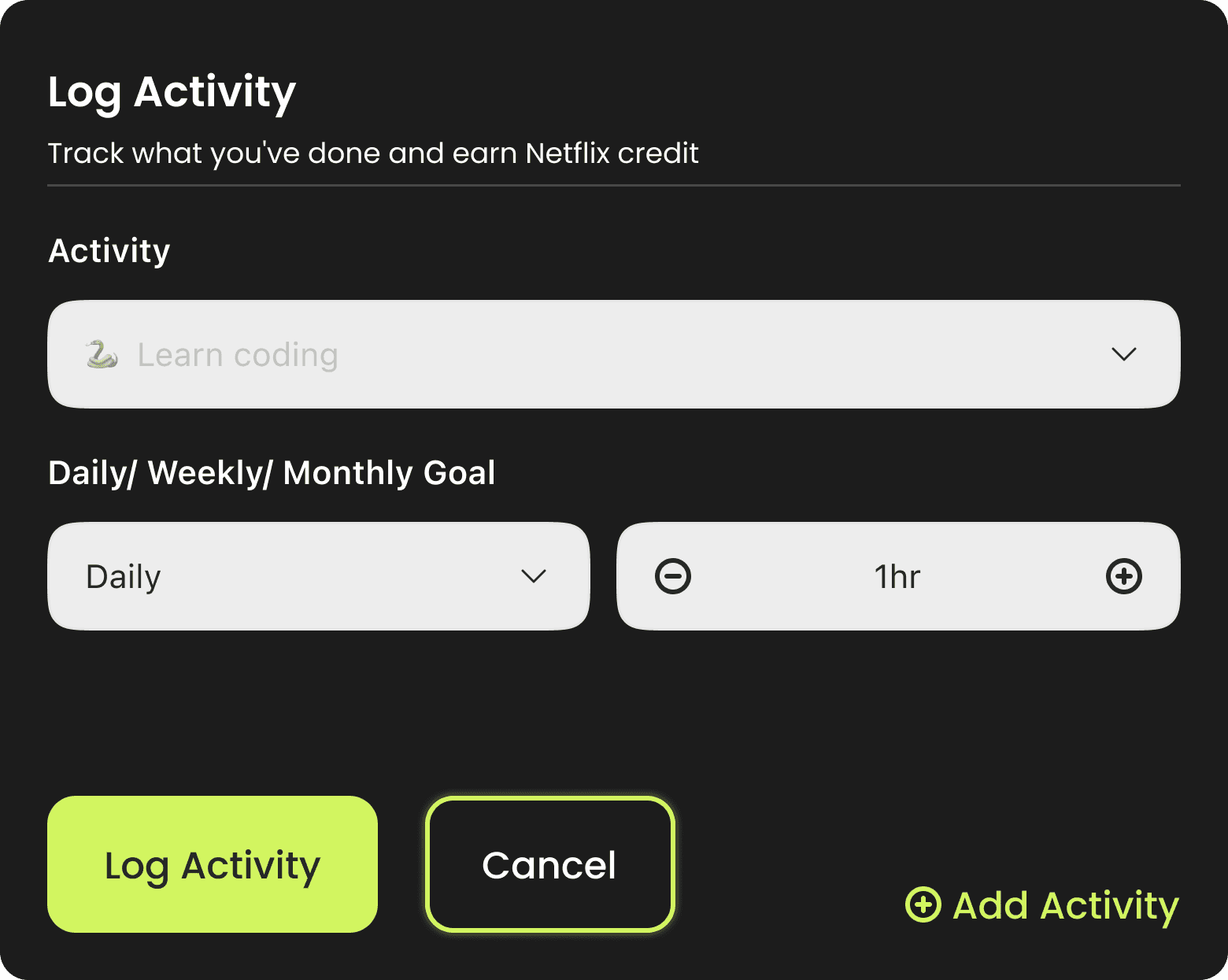
Balance Mode Widget: Shows “Netflix credits” vs. activities like “Learn Python / 4h credit.”
Touch-Grass Meter: A streak tracker to let you know how bad your binge watching habits are that you are holding a streak
Daily Focus Tracker: Productivity vs. streaming impact graph.
Onboarding Flows:
Triggers (Work Stress, Procrastination…)
Feedback-style slider (Gentle Nudge ⇆ Brutal Honesty)
what I shipped
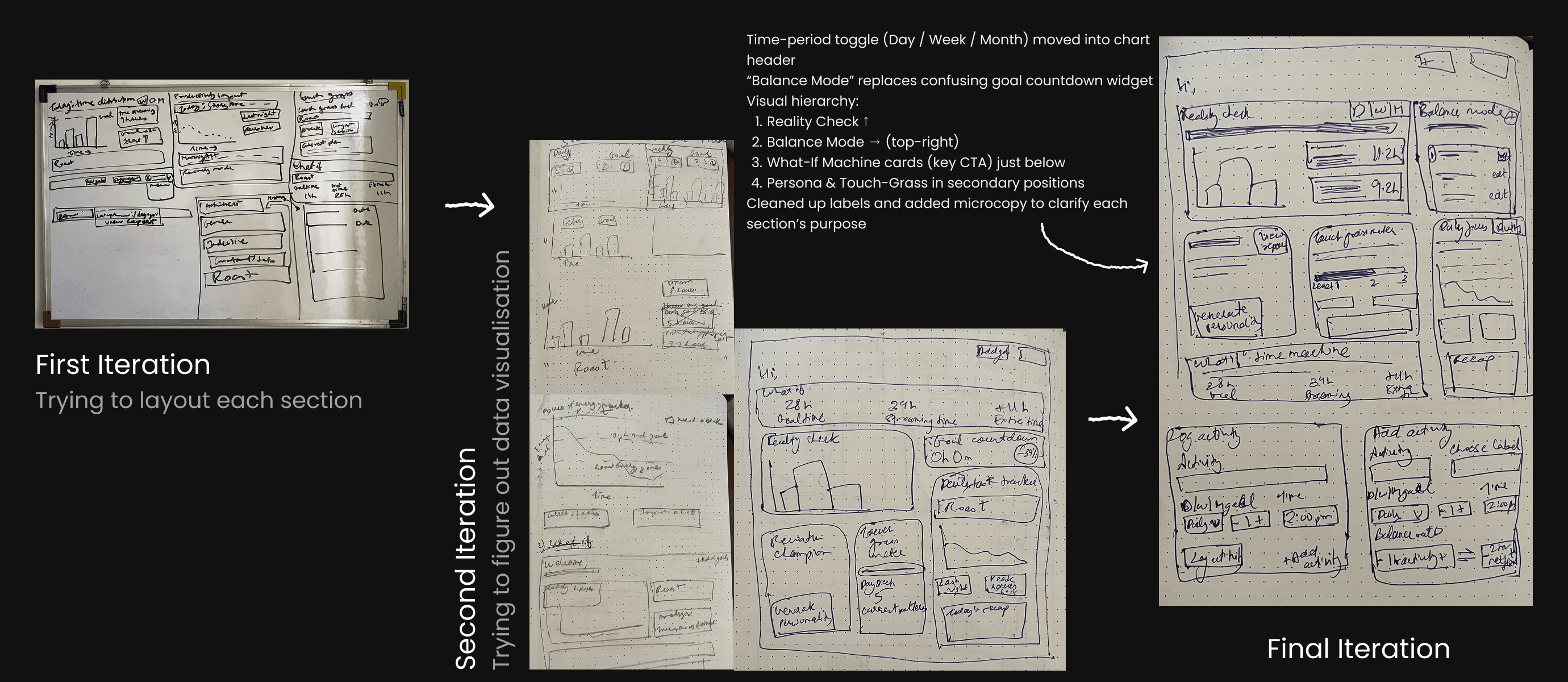
Full Figma prototype of the Zen dashboard:
Reality Check bar chart
What If Machine cards (language, fitness, creative skills)
Balance Mode widget with editable “Netflix credits” vs. goal credits
Touch Grass Meter streak tracker
Daily Focus Tracker graph
3-step onboarding flow (triggers selector, goal setup, feedback slider)
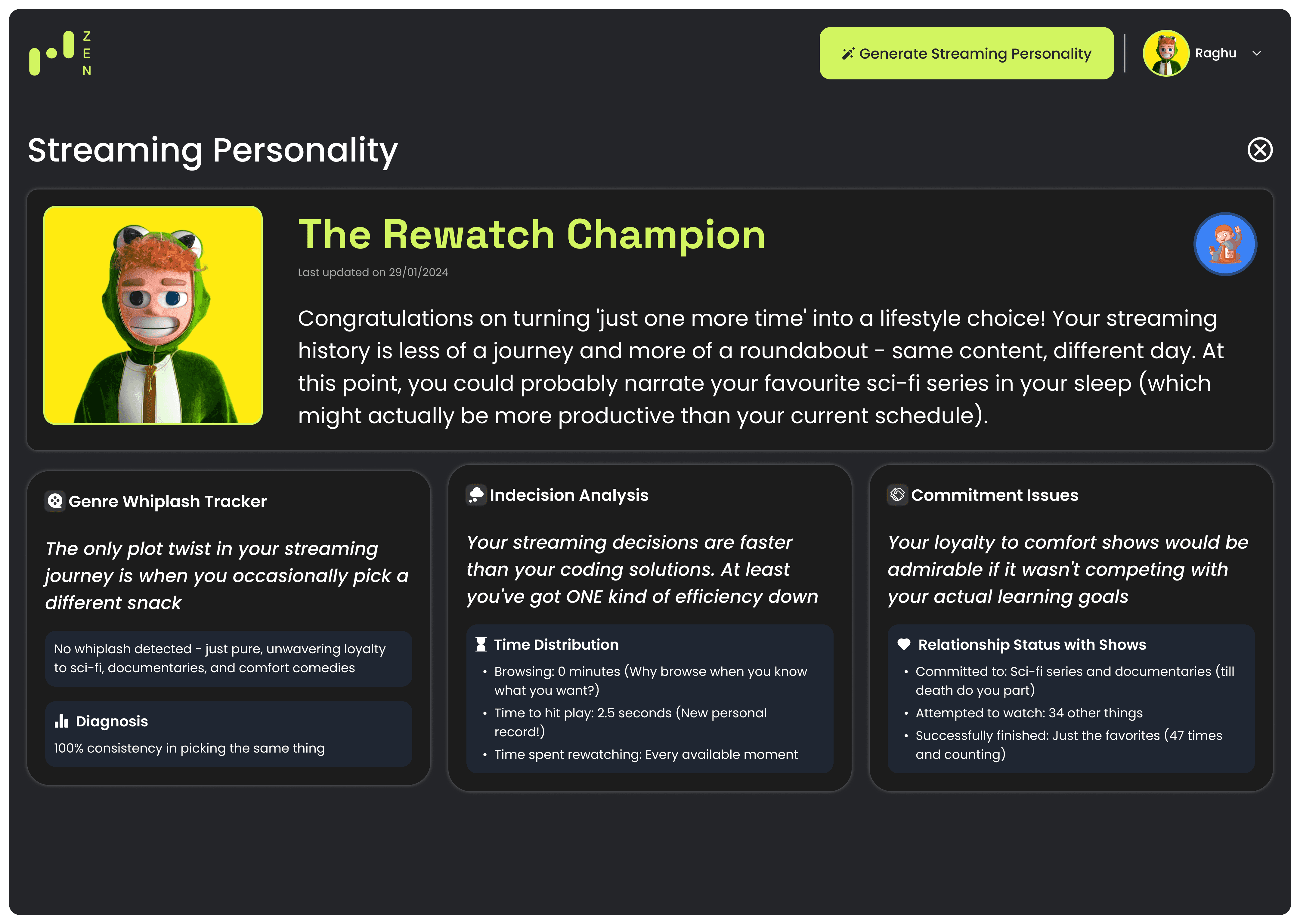
Brand identity: Logo, color palette, iconography, tone guidelines
Humor Wins: A friendly roast fosters openness more than any stern notification.
Concrete Comparisons: “Hours could’ve been coding” beats raw watch-time stats.
Autonomy Matters: Users abandon tools that feel controlling; offer choice, not commands.
Emotional Journey: Guide users from recognition → awareness → possibility, and you’ll avoid defensiveness.
This project taught me how powerful self-directed humor and choice architecture can be in turning raw data into lasting behavior change.